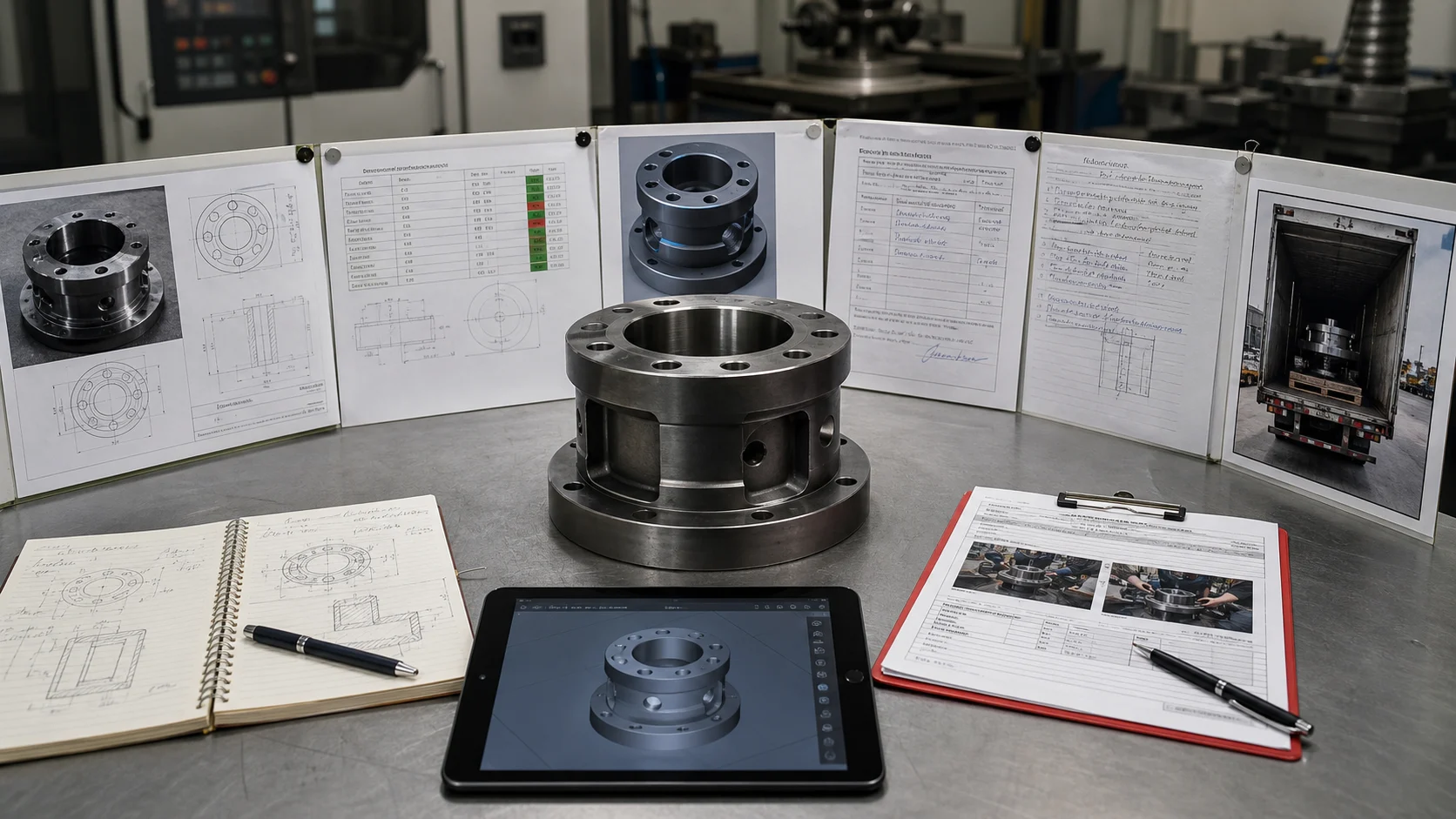
Quality history becomes valuable when requirements, configuration, process, material, inspection, exceptions, and release evidence remain linked to the product.
TL;DR
A reusable quality history links the authorized product configuration to material, supplier, route, equipment, tooling, process settings, inspection plans, actual results, nonconformance, deviations, rework, outside-process evidence, release, and delivery. It answers what happened, under which requirements, to which product, and with whose authority.
Do not treat the previous job as automatic approval for the next one. Reuse history to create a better baseline, expose changed conditions, and target review. The next release must still be authorized for its current revision, material, supplier, process, equipment, and contract.
Records Become an Asset When They Preserve Context
A folder of PDFs can satisfy retention while remaining nearly useless to production. The organization still cannot answer:
- Which setup produced the accepted parts?
- Which material heat was affected by the hardness failure?
- Did the outside processor change?
- Was the deviation valid for one lot or the whole part number?
- Which characteristics drift first?
- Can the previous inspection plan be reused on the new revision?
- What evidence must be recreated after a supplier transfer?
NIST's digital-thread research emphasizes reuse and traceability of information across design, manufacturing, and quality functions [1]. The practical starting point is not a perfect digital twin. It is a stable set of relationships around the job.
The Quality-History Spine
| Record domain | Minimum context |
|---|---|
| Product definition | Part, revision, model, drawing, BOM, specifications, and effectivity |
| Contract | Customer, PO, line, quantity, flowdowns, approved sources, and delivery |
| Material | Specification, condition, producer, heat/lot/batch, receipt, and issued quantity |
| Route | Authorized operation sequence, work center, internal/outside status, and completion |
| Resources | Machine, program, fixture, tool, gauge, software, and revision |
| People | Operator, inspector, approver, qualification, and timestamp where required |
| Process | Setup and controlled parameters, checks, alarms, and changes |
| Quality | Plan, characteristic, nominal/limits, method, equipment, result, and status |
| Exceptions | Nonconformance, containment, cause, disposition, deviation, rework, and verification |
| External evidence | Supplier certificates, test data, process lot, shipment, and acceptance |
| Release | Quantity accepted, rejected, scrapped, shipped, approver, and record completeness |
Each record should carry stable identifiers so users can move from the part to the event and from the event back to the requirement.
Preserve the Baseline and the Actual
Manufacturing records need both:
- the authorized baseline: what should have happened; and
- the actual history: what did happen.
If a traveler is overwritten after execution, the history loses its baseline. If a plan changes without revision and effectivity, results from different methods appear comparable when they are not. If a supplier certificate is stored without part or lot linkage, it cannot close acceptance.
NASA quality requirements provide a high-consequence example: identification and traceability controls cross-reference objective evidence such as certificates, production history, qualification, verification, and usage history [2]. Not every manufacturer needs NASA's control depth, but the linking principle scales down well.
Record Events, Not Just Final Documents
Useful history includes events:
- material received;
- material issued or split;
- setup approved;
- first piece accepted;
- tool changed;
- process drift detected;
- parts sent to an outside processor;
- certificate received and reviewed;
- nonconformance opened;
- quantity contained;
- deviation approved;
- rework completed and verified;
- final release; and
- customer or field feedback received.
For each event preserve who or what created it, time, affected product identity and quantity, input state, result, evidence, and authorization.
NIST IR 8536, currently a second public draft, explores structured recording and linking of traceability data across manufacturing ecosystems [3]. It is research guidance rather than a contractual requirement, but its event-and-link orientation is useful for designing internal records.
Make Inspection Data Comparable
To compare results across jobs, preserve:
- stable characteristic identifier;
- requirement revision;
- nominal and limits;
- unit;
- measurement method and program revision;
- datum alignment or fixture;
- measurement equipment;
- actual value;
- part, serial, cavity, tool, or lot;
- timestamp and process stage; and
- validity/status.
NIST's Quality Information Framework survey describes standardized information models spanning product definition, inspection planning, execution, analysis, and reporting [4]. A shop does not need to implement QIF to adopt the underlying discipline: actual values without context are not reusable quality data.
Five High-Value Reuse Cases
1. Repeat-job planning
Start with the last accepted route, setup, tools, inspection plan, outside processors, and lead-time history. Highlight what changed instead of rebuilding from memory.
2. Risk-based inspection
Review prior capability, drift, escapes, rework, and measurement problems. Strengthen controls where history demonstrates instability; do not reduce contractually required inspection without authority.
3. Root-cause investigation
Bound affected product by material, time, machine, tool, operator, process lot, and measurement result. The faster the genealogy query, the smaller the containment can be.
4. Supplier qualification
Compare actual delivery, certificate completeness, deviation frequency, incoming results, corrective action, and recovery—not a remembered score.
5. Quoting and promise dates
Use actual setup, run, outside-process, inspection, rework, and queue history. Historical time is not a guaranteed standard, but it is a better starting point than an unsupported estimate.
Reuse Requires a Change Gate
Before reusing history, compare:
| Change dimension | Review question |
|---|---|
| Product | Did drawing, model, BOM, software, or specification change? |
| Contract | Did customer flowdowns, approved sources, quantity, or evidence change? |
| Material | Did alloy, condition, producer, form, or lot behavior change? |
| Process | Did route, parameters, program, fixture, tool, or outside processor change? |
| Resource | Did machine, measurement equipment, software, or location change? |
| Scale | Did batch, annual volume, cadence, or automation change? |
| People | Did responsibility or required qualification change? |
| History | Was there an unresolved escape, complaint, corrective action, or concession? |
The output should be a controlled decision: reuse unchanged, reuse with targeted review, requalify specific elements, or build a new baseline.
Avoid the Record Graveyard
Common failure modes include:
- filenames as the only index;
- scanned documents without searchable metadata;
- quality records separated from the job and revision;
- overwritten travelers;
- certificates accepted but not reviewed;
- actual values converted to pass/fail only;
- nonconformance stored outside production history;
- temporary deviations treated as permanent;
- missing quantity reconciliation;
- access restricted so tightly that legitimate users create side files; and
- retention with no migration or retrieval testing.
The remedy is a small controlled data model, not more folders.
Minimum Implementation
Start with one repeat product family:
- assign stable job, part, revision, lot/serial, operation, and characteristic identifiers;
- link released requirements to the traveler or route;
- capture material and outside-process identity;
- attach inspection actuals to characteristics and product;
- connect exceptions and approvals to affected quantity;
- close every job with accepted, rejected, scrapped, and shipped reconciliation;
- build a repeat-job change review;
- test one forward and one backward trace; and
- define retention, access, correction, and audit rules.
The operating record should live with the manufacturing workflow rather than in a post-job archive. That connected job history is one of the problems the AIURION manufacturing operations platform is designed to address.
Quality-History Audit
Choose one shipped lot and prove:
- current product and contract baseline;
- material origin and issued quantity;
- completed route and resources;
- required inspection and actual results;
- outside-process evidence and review;
- exceptions, disposition, and rework;
- release authority and quantity reconciliation;
- shipment identity.
Then choose one new repeat order and show how the prior history changes the plan. If it does not, the archive is retained evidence—not yet a reusable asset.
Related Articles
References
- National Institute of Standards and Technology, Enabling the Digital Thread for Smart Manufacturing.
- National Aeronautics and Space Administration, NPR 8735.2C, Chapter 4 — Hardware Quality Assurance. Used as a high-consequence traceability example.
- National Institute of Standards and Technology, NIST IR 8536, Second Public Draft — Supply Chain Traceability: Manufacturing Meta-Framework. Draft research guidance, not a normative manufacturing requirement.
- National Institute of Standards and Technology, End-to-End Quality Information Framework Technology Survey.